Inside the Sleeping Museum the Linnaean taxonomies mash, remix, and mash again.
Flora and fauna, murmuring in their vitrines, swap costumes, birthing unnatural histories.
Under fluorescent suns Victorian wunderkammers slosh and spill their sums, untranslating the narratives back (forward) into primordial swarm.
Here we glimpse the “liminal merge,” the “visible join” of slow-wave sleep. Forgotten breeds seaming and sampling themselves, captured on nocturnal camera traps.
Scent of imaginal discs percolating in somnambulistic chambers.
Because the future of specieshood is un-knowable, the Sleeping Museum has gone offline.
Leaking syrupy logics of the future-ancient.
Digital blends of my paintings, collages, assemblages, backyard macrophotography, children’s drawings, & shots of museum dioramas using a midjourney, magnific, topaz, photoshop workflow.
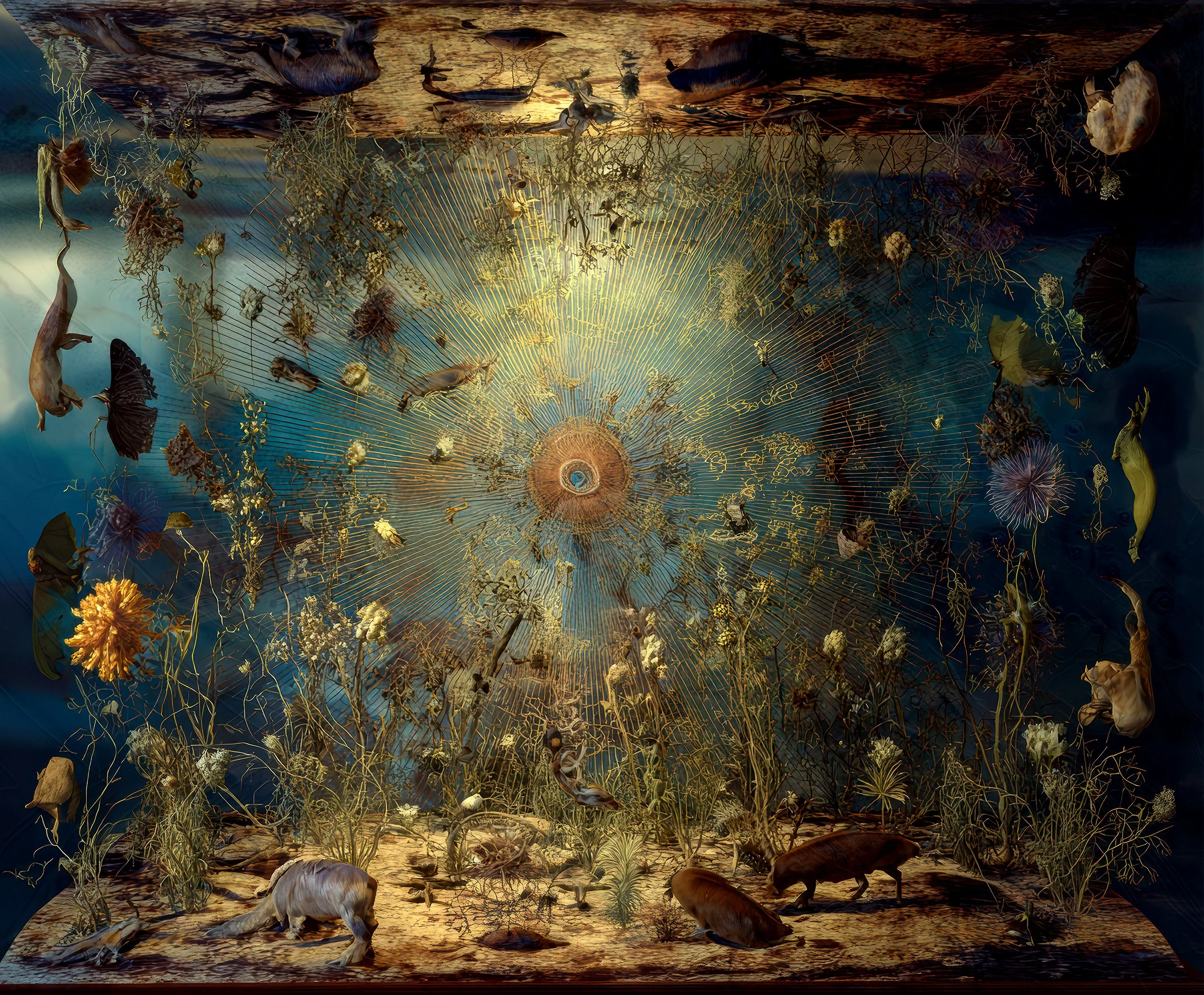
The “Axis Mundi, Third Eye”, one of the nine major “blind spots” offering access to the eidetic plains.
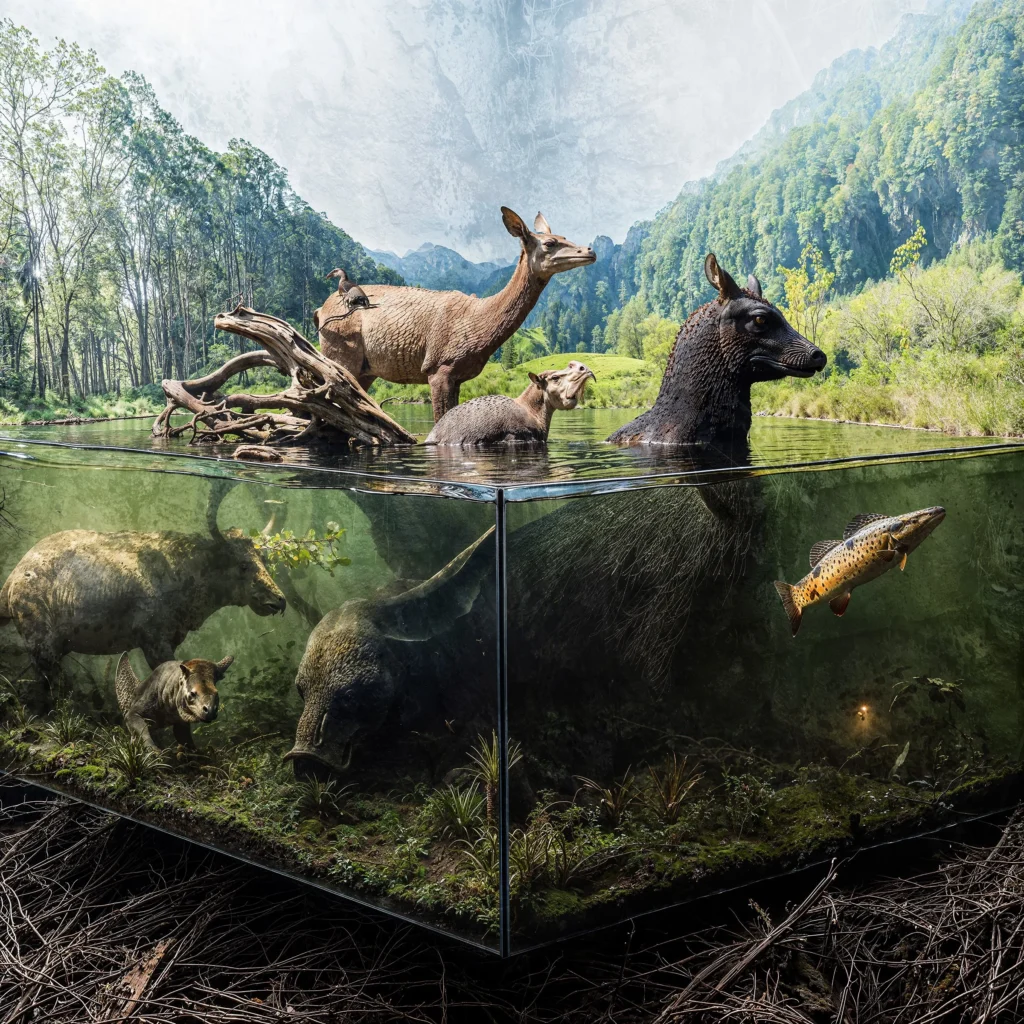
One of the “bathing boxes” designed by Rowland Ward, dioramas inspired by Ernst Haeckel’s “gill arch” theory.
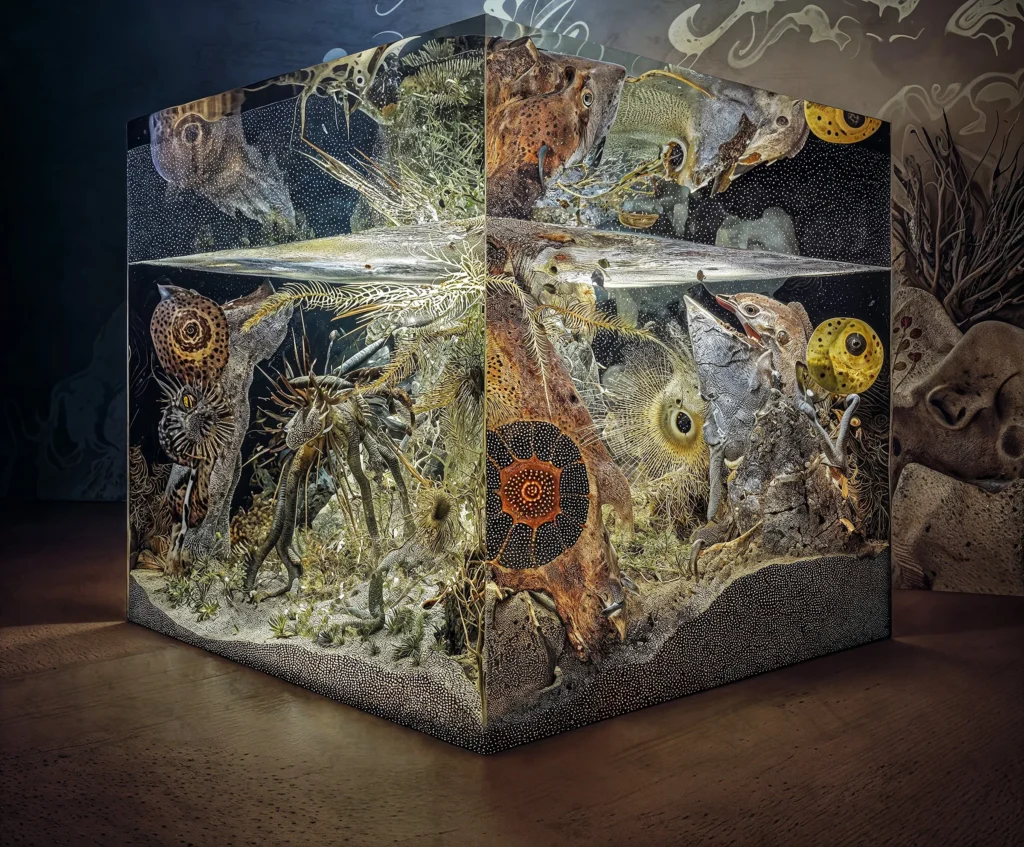
Accession no. 1887.IV.23: this Wardian Case, was delivered in a state the curator described only as “ontologically unrealizable.”
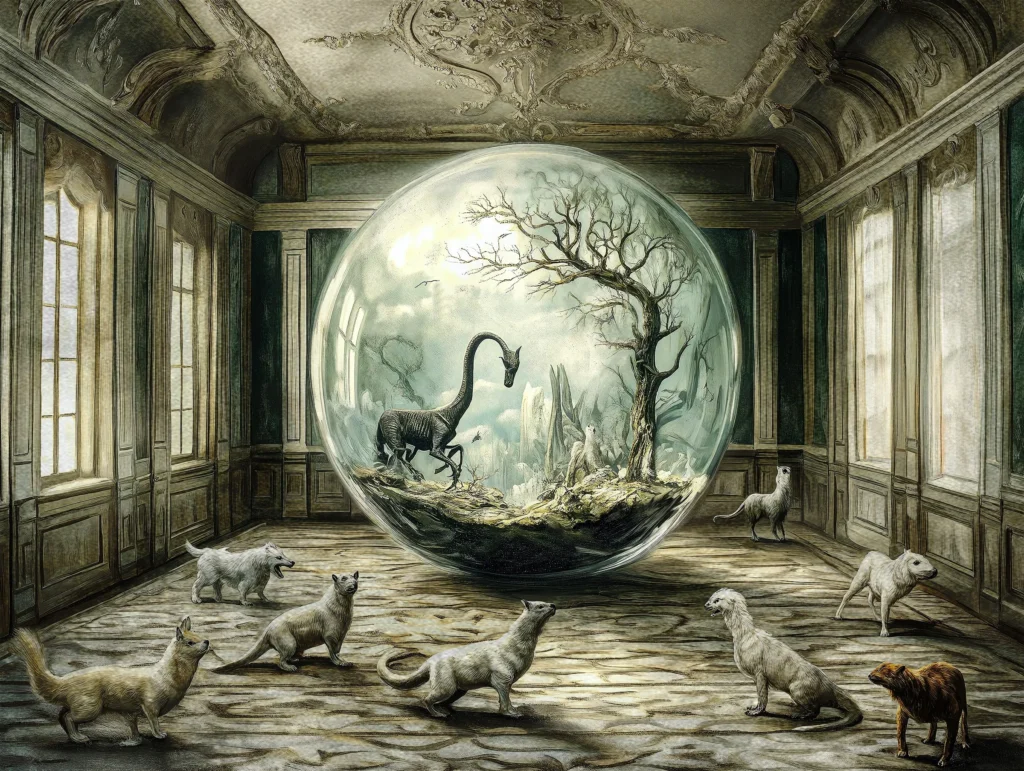
Move close to the demon globe, inhaling slowly, deeply. Notice how the scent, recorded in the 1879 inventory as “camphor, with an undertone of warm graphite,” is still detectable.
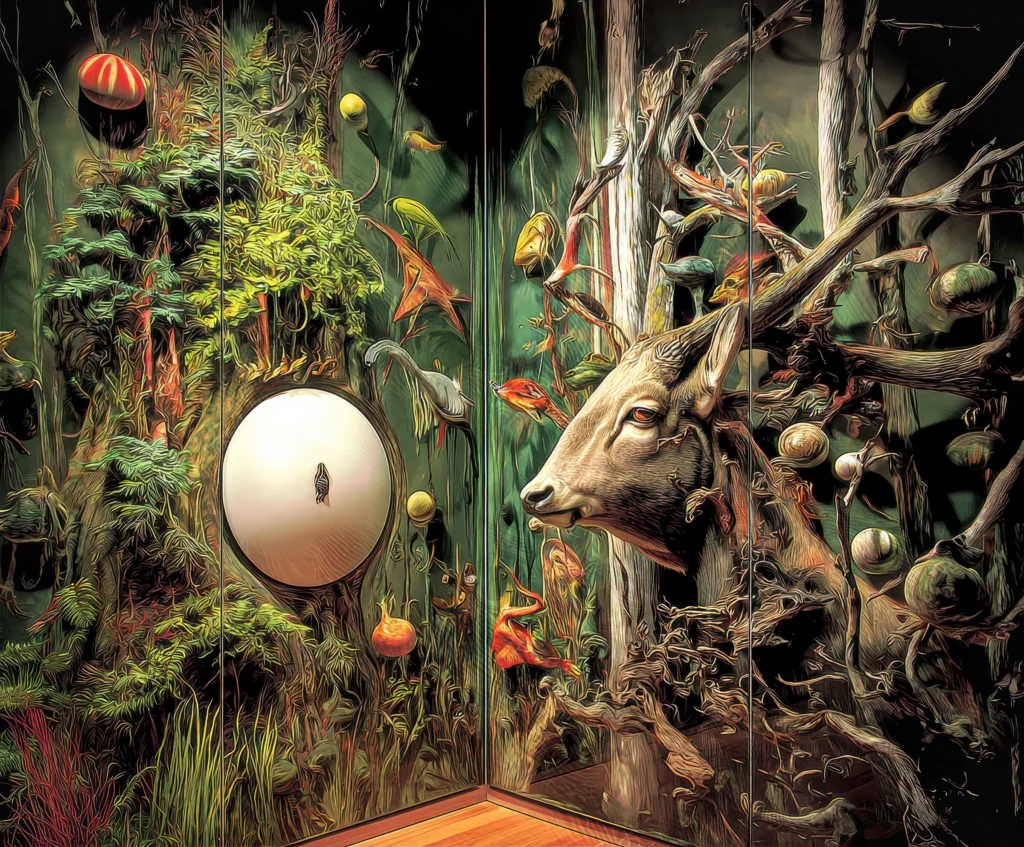
During the “bovid” phase of oneiric transformatio, deciduous horns, if they are in fact horns, interlock and conjoin with the surrounding canopy in a display of split hemispheric ecstasy.
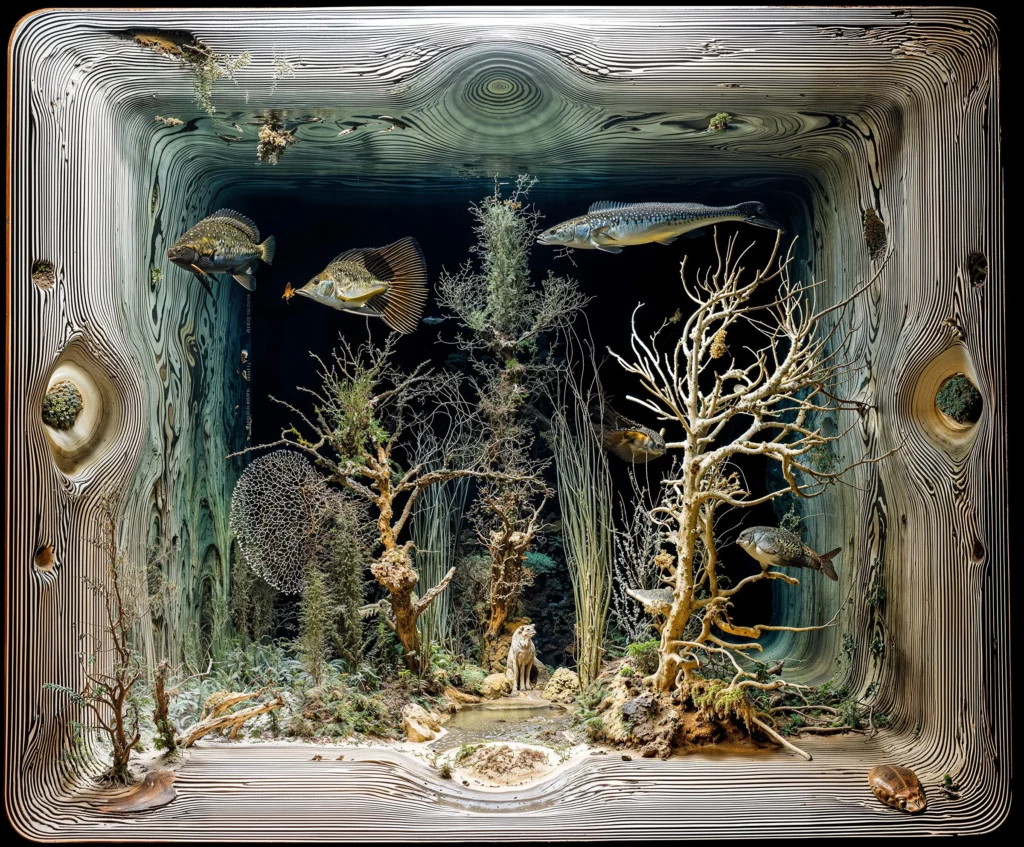
Gemmules — Darwin’s hypothetical units of heredity, later discredited — would account elegantly for the specimen’s tendency to regenerate in the style of fabulist species.
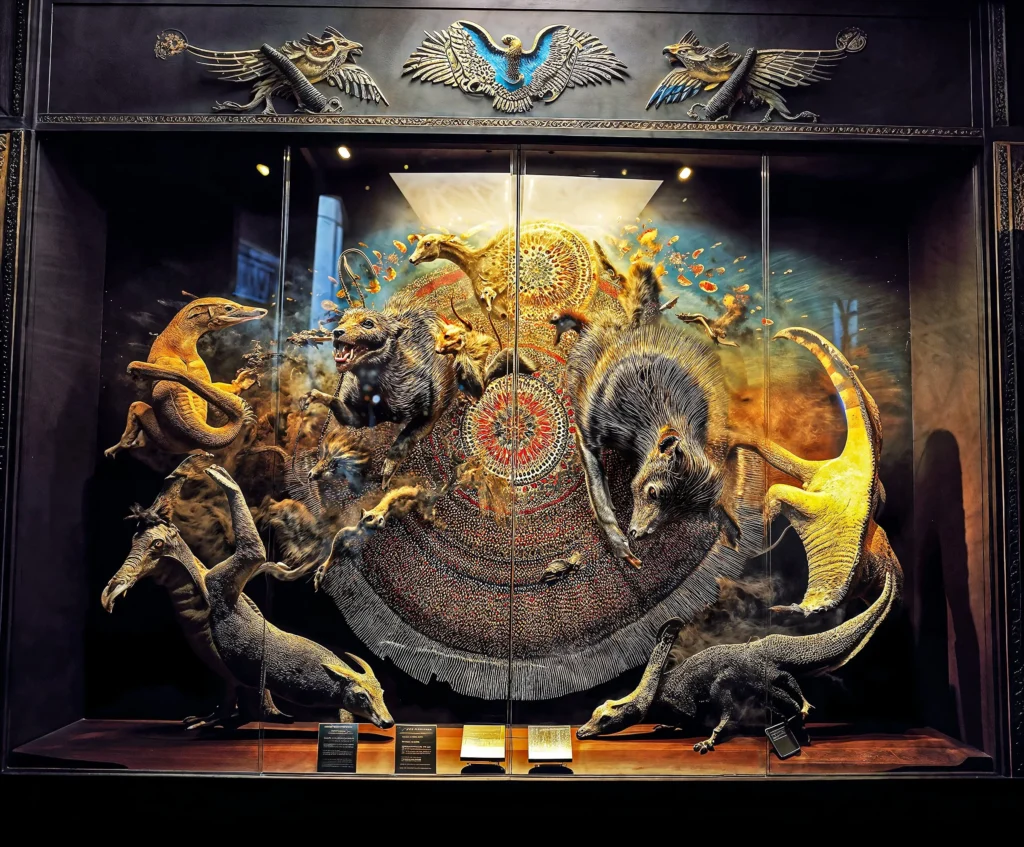
Miasmatic theories, long abandoned, find a strange second life here: the specimen appears to influence its interior “neighbors” through proximity alone, without contact, without mechanism.
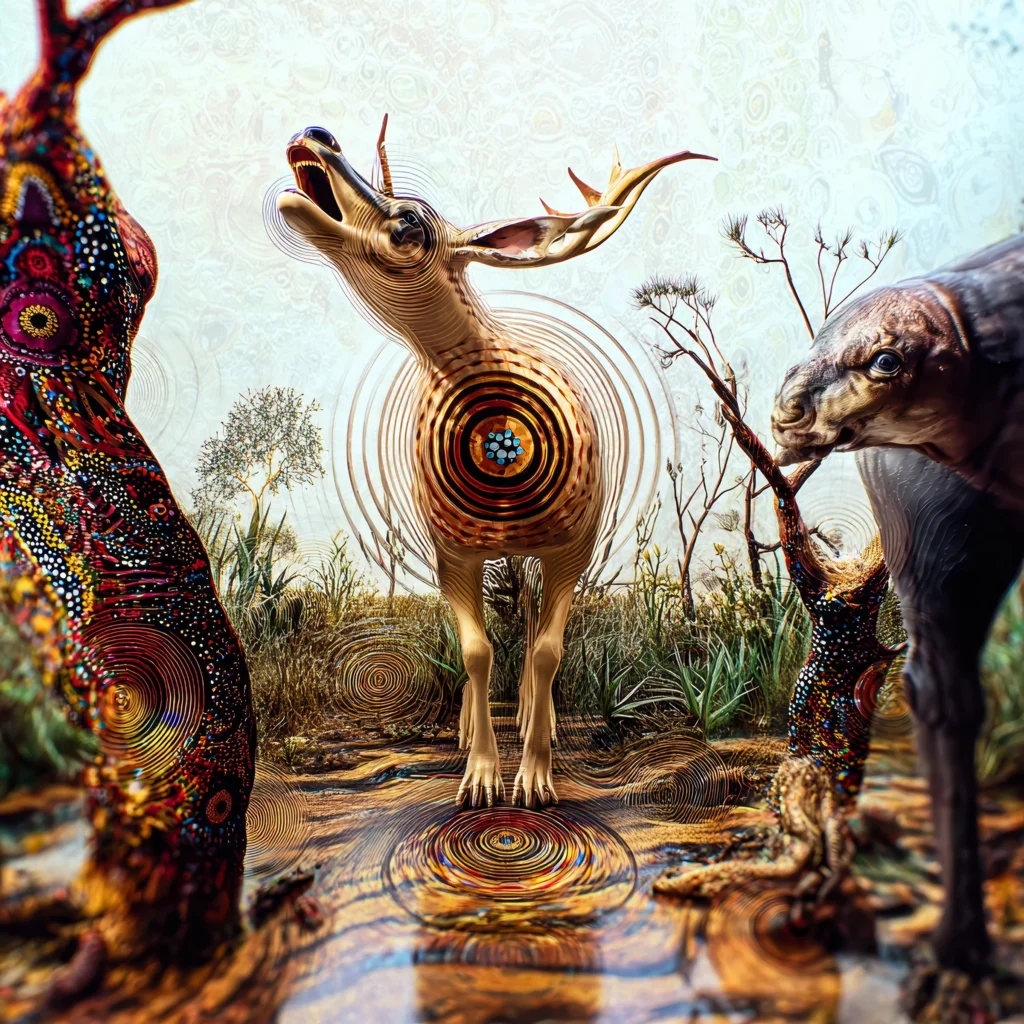
An example of “devotional exudation,” a hyper-empathetic response triggered from licking the bark of the dreamtone tree.
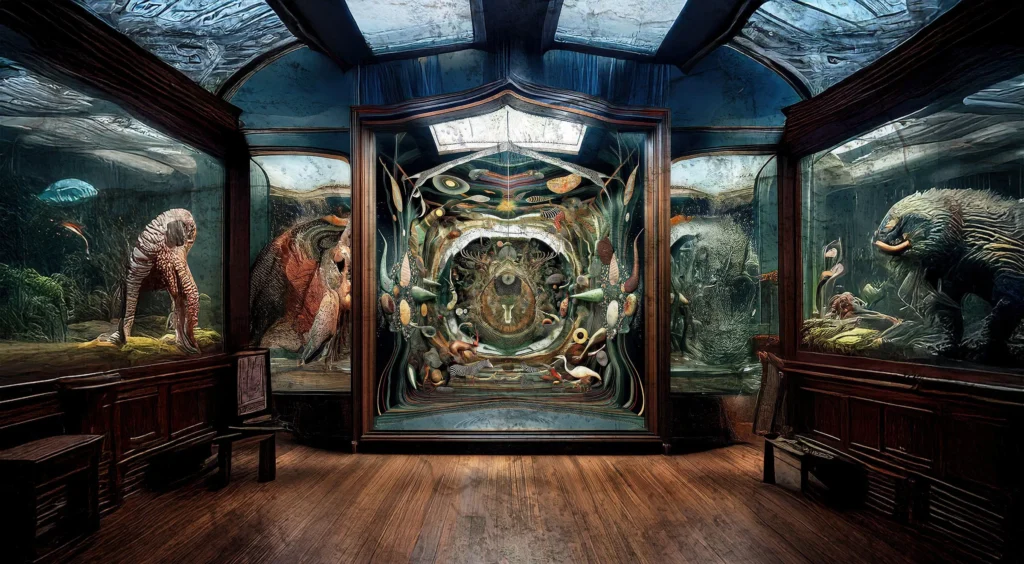
Formerly classified under the Linnaean heading Cryptogamia, flora and fauna in this wing struggle to migrate through nine (subterranean) kingdoms of autopoetic transmogrification.
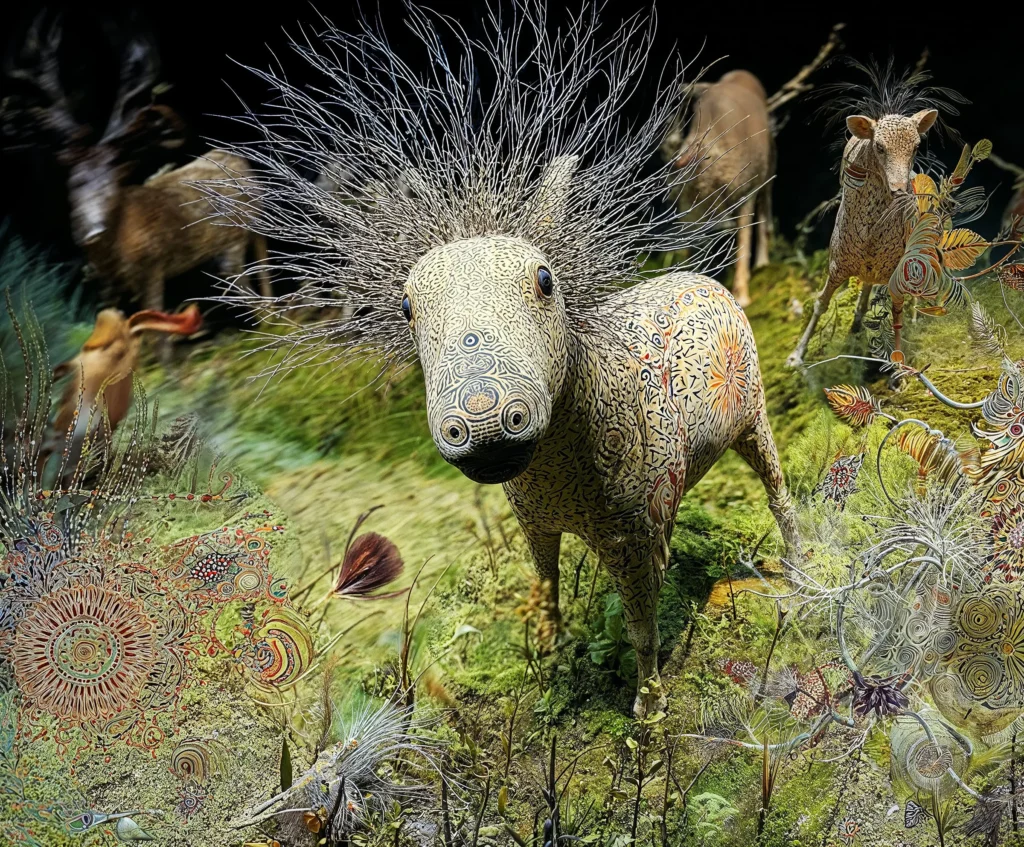
A young primeval caprid undergoing “liturgical pelting,” in which the outer integument is shed not physically but in terms of paragnostic exuberation.
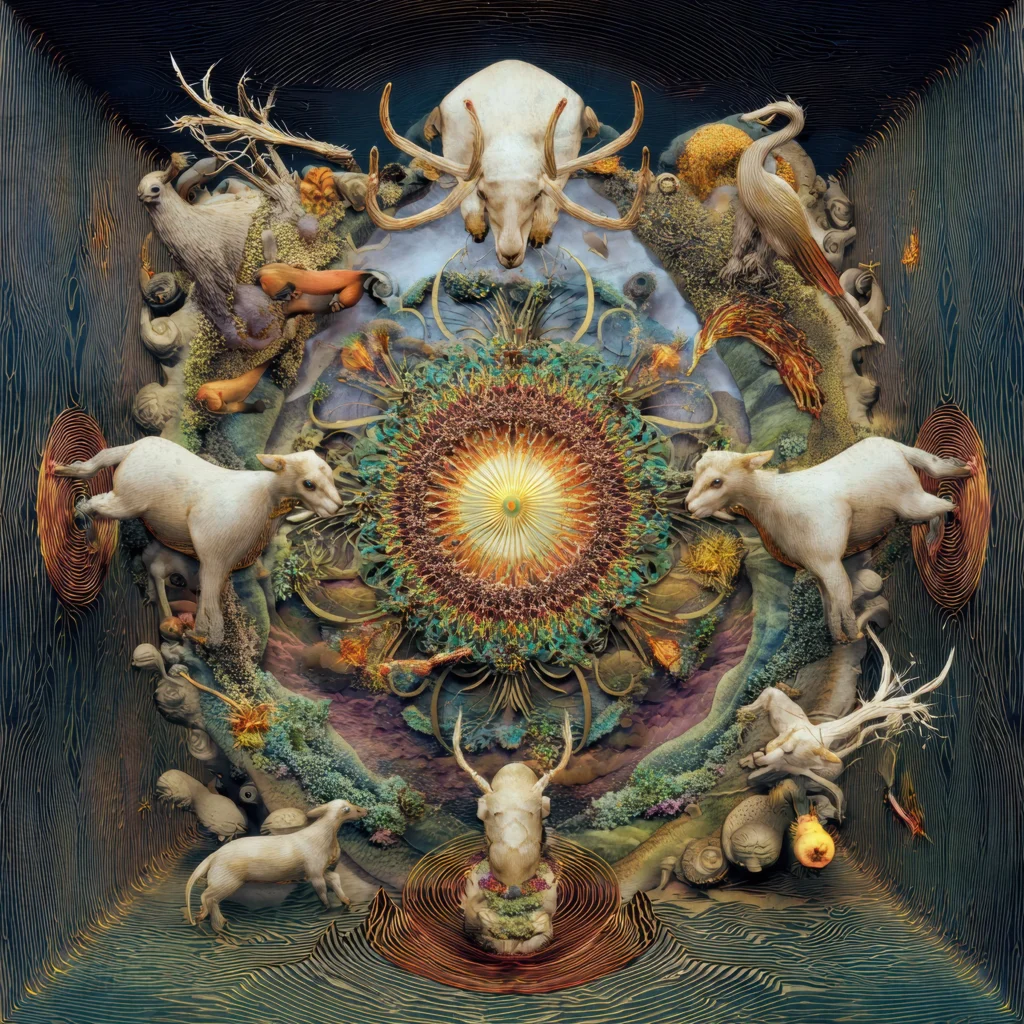
What Al-Jahiz called the “peristaltic halo” is now understood to be a centrifugal imprinting upon the biotic collective