Four Dada Women
About two years ago I taught a class on Dada for some kids at a summer camp. I usually teach hands-on art techniques so I was a little nervous to do a lecture-heavy class, but it worked really well. Some highlights in case you ever find yourself in a similar spot:
I started by dramatically writing the number “20,000,000” on the chalkboard. That’s the number of people who died in WWI, give or take a few million. I then asked them if they knew what WWI was about. No one. Did anyone even know the countries in WWI? A few said “Germany” or something. I then made the case that while we’re gonna see some stuff that doesn’t make much sense in this class, whenever someone says “I don’t understand” or “That’s dumb” instead of trying to convince them it’s Art, I’m just gonna point to this number. They seemed to get it.
On Day 2, I told the kids to write down their truest true-y deep feelings in a poem. About what? Anything. Are we gonna read these out loud? Yes I said, but *Don’t worry* no one will understand. They immediately got very anxious. I told them to trust me and to just try their best. Some seemed very skeptical. I then had them all come to the front of the room. The rules were, when I gestured to begin, they all had to read at the same time. If they got to the end of their poem, they had to go back to the beginning so that everyone was reading the whole time. When I said stop, they would all stop. They really got into this and afterwards we talked about the feeling of relief that came from not having to be such a big ol’ lonely vulnerable feeling subject all the time and to just be part of a group, united in nonsense. They asked to do this again to begin some of the classes, and ironically, said they found it easier to write poems knowing this was the way they’d be presented.
Everyone loves collage. And it is very conducive to pleasant group conversation. Collage is genius. Are there digital equivalents? Do they work the same?
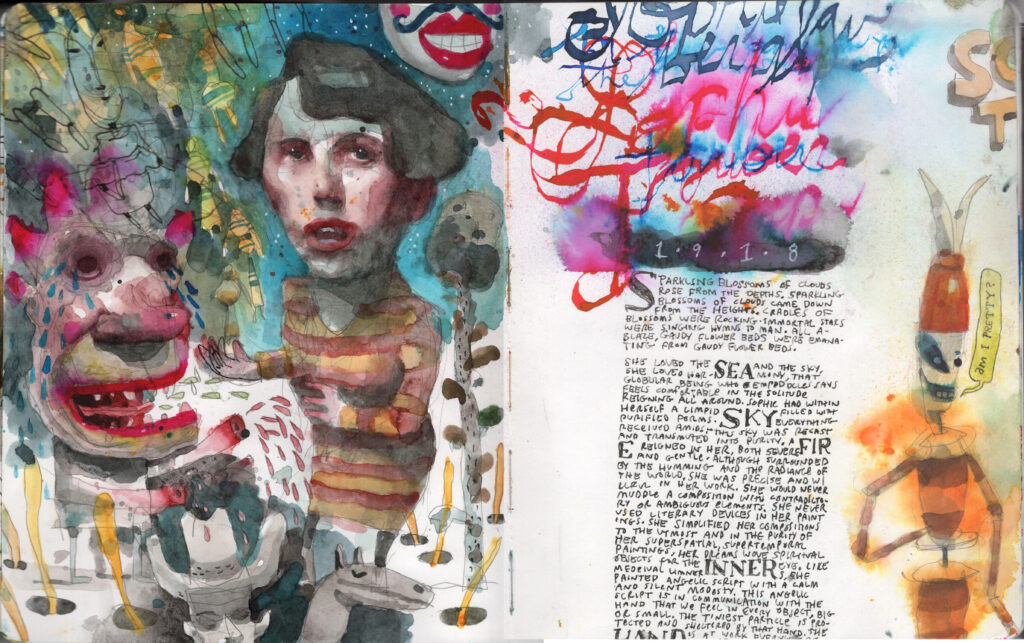
The Women: At the end of the class I tried to show Dada through the lens of some of the women in the movement. This was not just an attempt at fairness, but to show that women, for whatever reason, just so happened to be way more intense and went further into Dada than the men, maybe because they had less hope of being big and famous. Here they are:
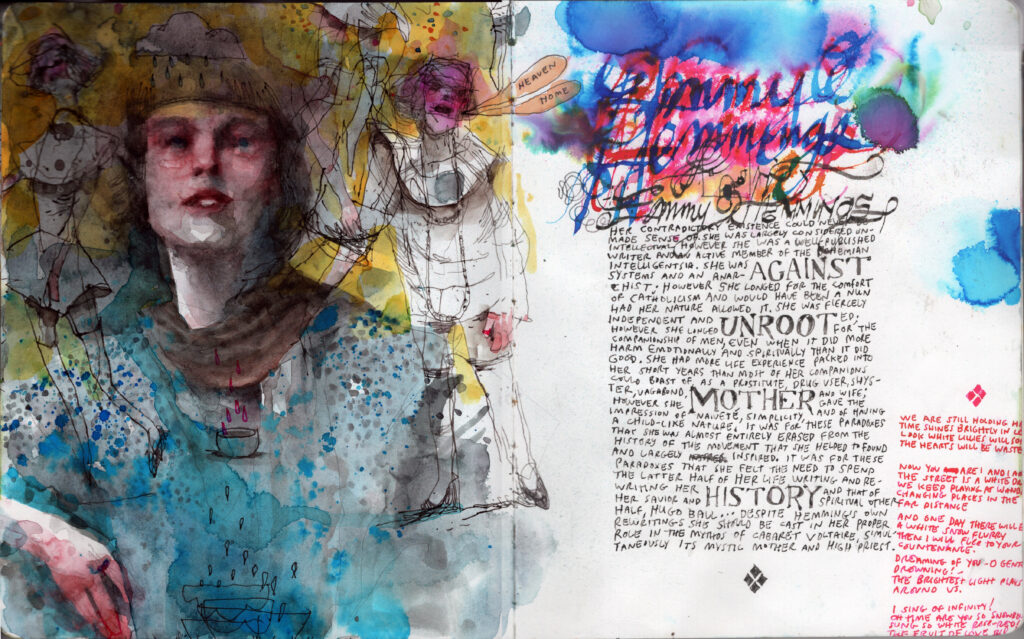
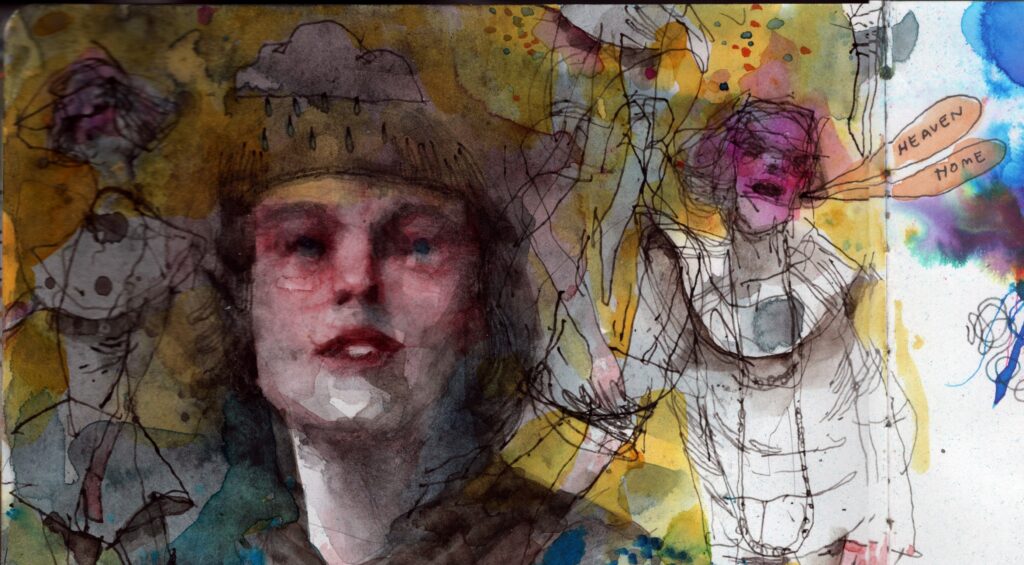
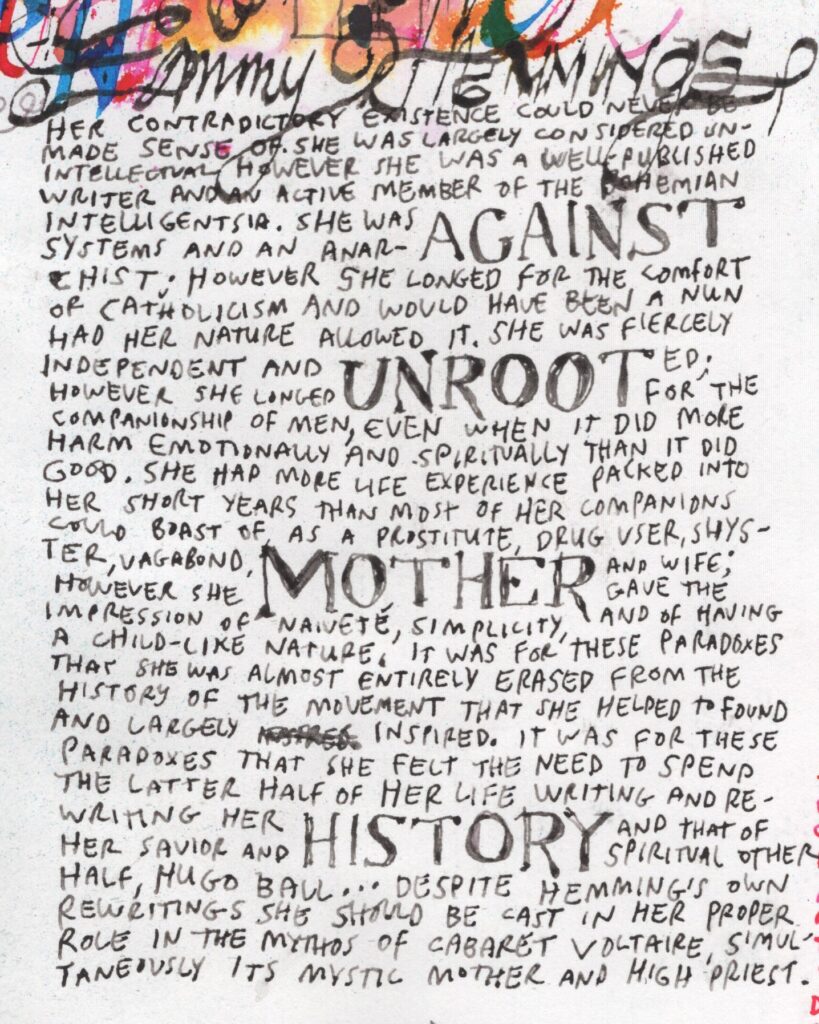
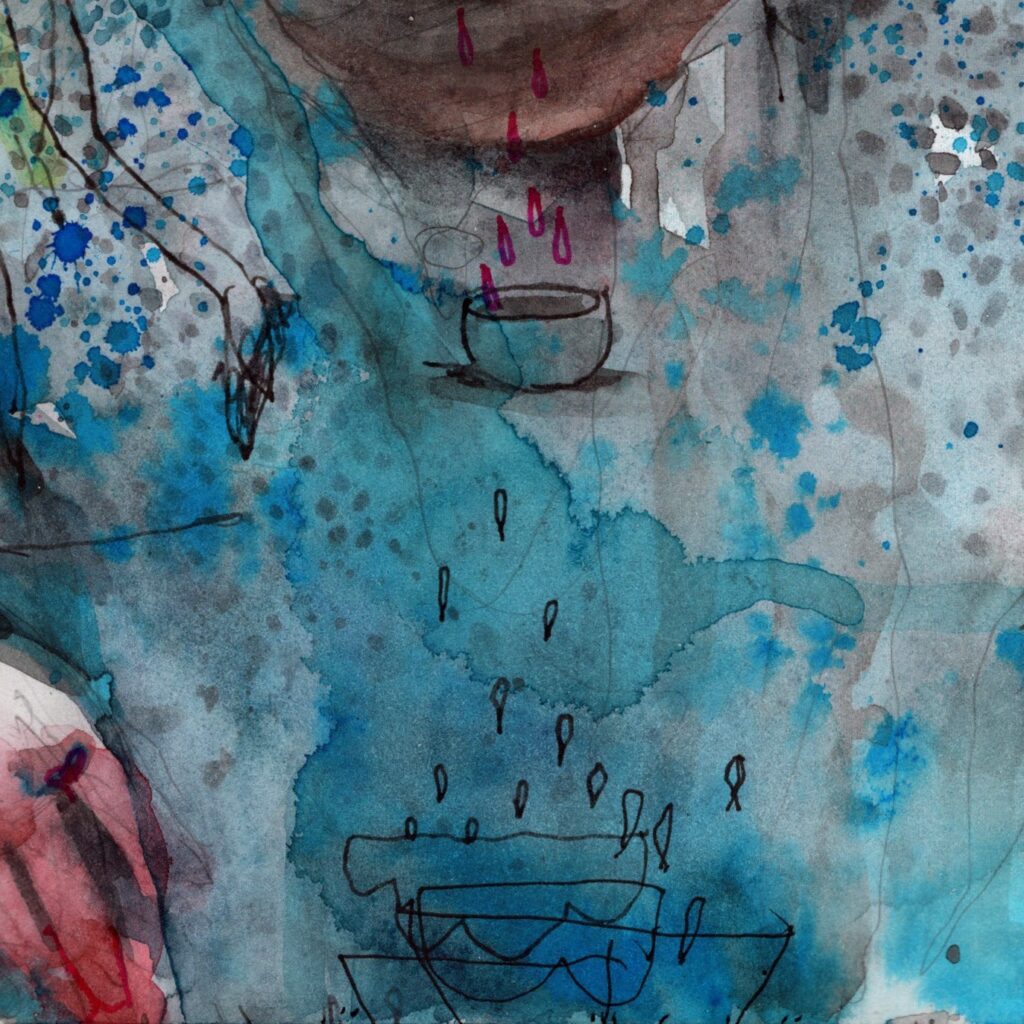
Emmy Hennings (1885-1948): Originally considered a marginal figure attached to her partner Hugo Ball, Hennings has emerged as a genuine co-founder of the Cabaret Voltaire and the one with more practical and artistic experience in cabaret. Among her contributions is promoting the role of dance in Dada, which was also underappreciated. Dance is notoriously hard to capture, and is sort of the original uncommodifiable artform, making it well suited to dada. However, it was crucial to supporting the communal and participatory role that was so important to dada.
Details from Emmy Hennings:
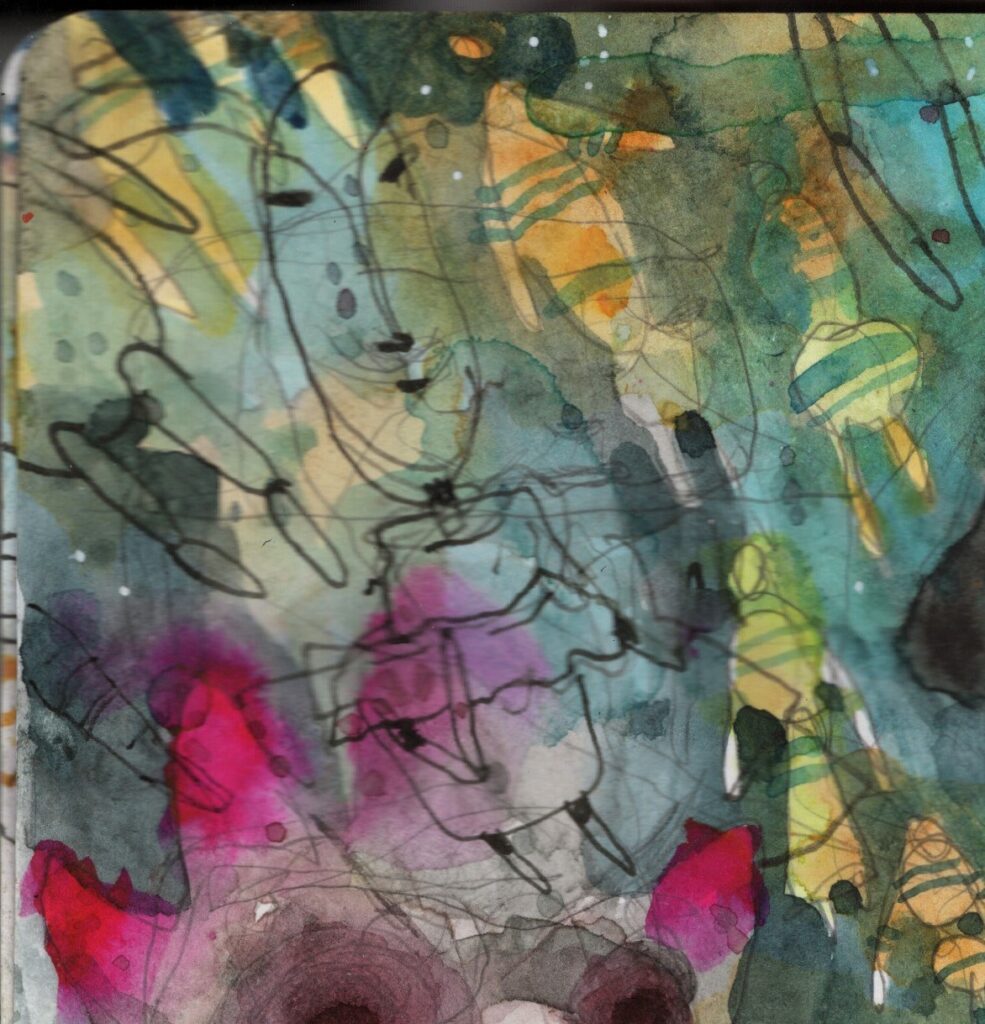
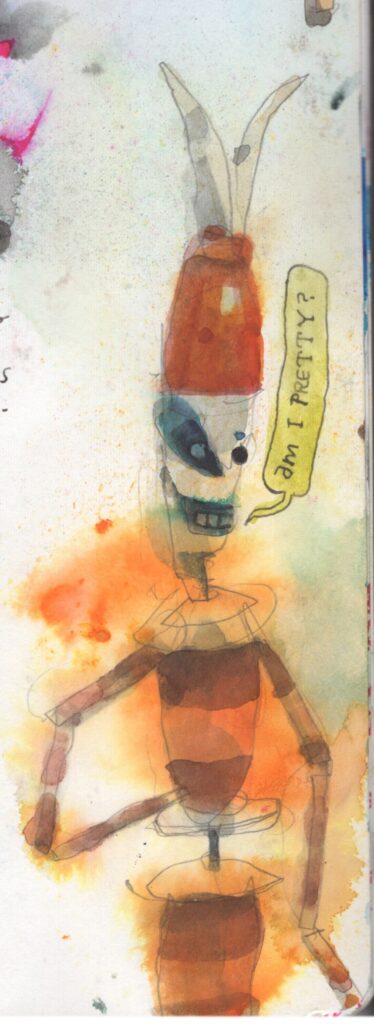
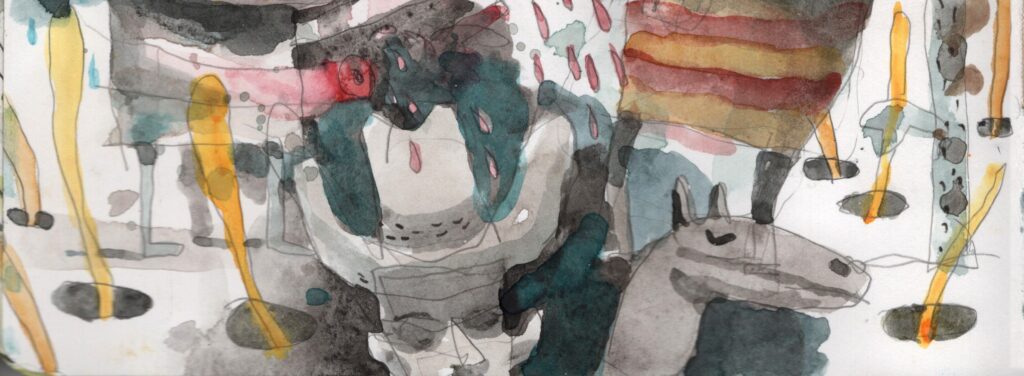
Sophie Taeuber-Arp (1889-1943): One of the problems of teaching dada to kids is to get them to realize that vague notions of creativity and expressionism are kinda sorta the enemy here. They’ve been so steeped in these assumptions that it’s maybe even cruel to try to get them to wrap their heads around it. But S. Taeuber-Arp is very helpful for this. She liked to make stuff. Even beautiful stuff (gasp). She believed in art, but her work avoided the cliches of expressionism. In this way, she is very much like many of the students, who actually, when they realize it, are more into making stuff in a community than expressing themselves all over the place, which can tend to heighten alienation and isolate oneself.
Details from Sophie Taeuber-Arp
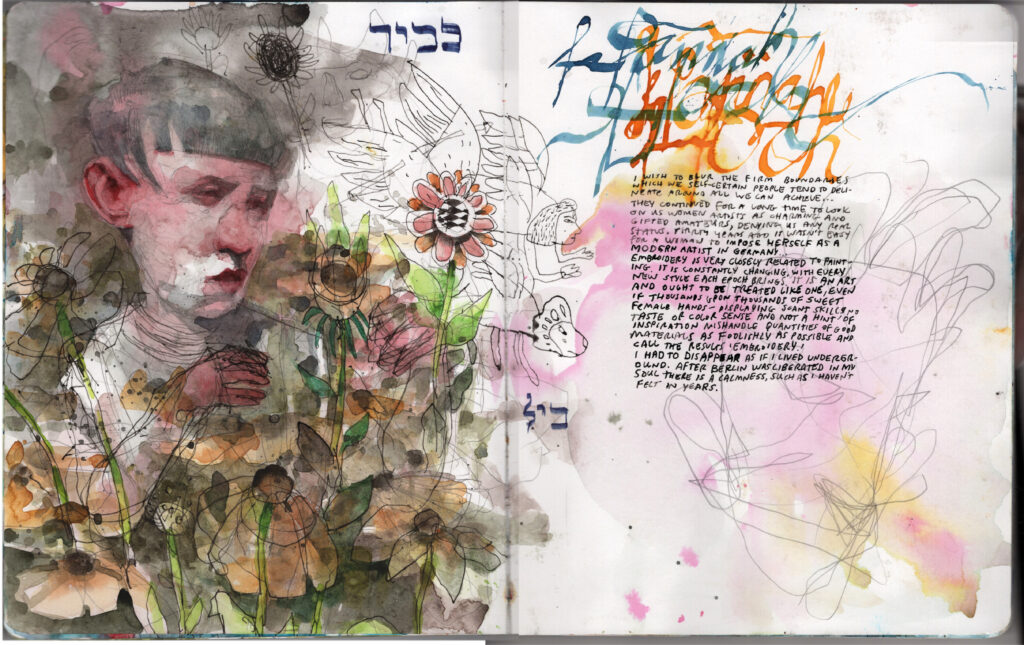
Hannah Hoch (1889-1978): For Hoch, I didn’t say anything, I just showed her collages in silence. They are so damn good, even now. Of all the modernist art from that era, these “depersonalized” images are perhaps still the most direct, most touching and most human to survive. Of all the Dada Mamas, she lived the longest, and we talked about her wartime years and after.
Details from Hannah Hoch
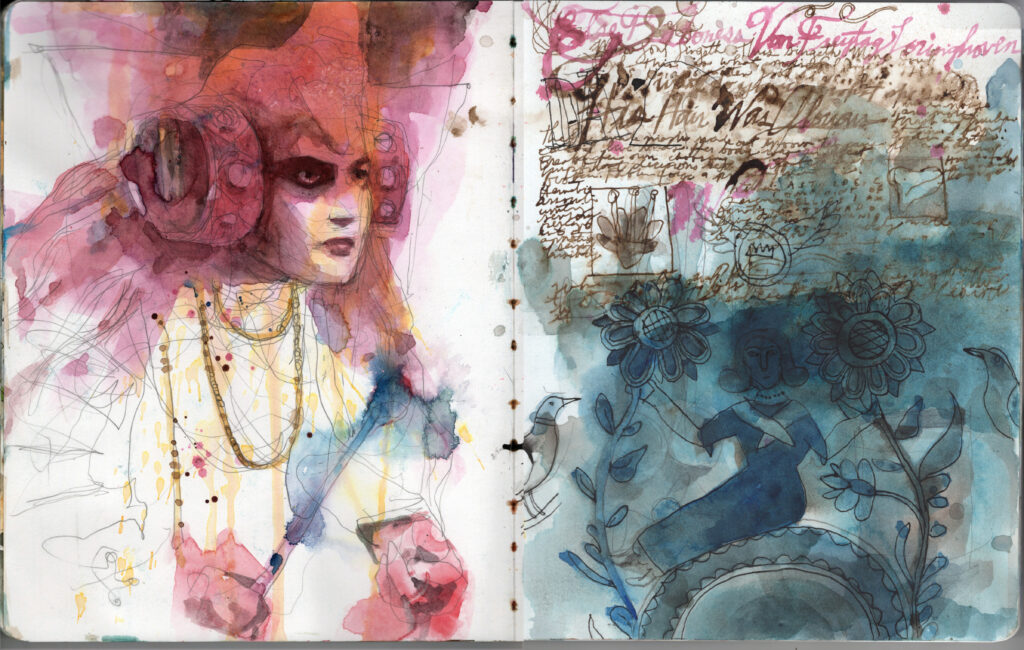
Elsa Von Freytag-Loringhoven: (1874 –1927) “The Baronness”. I started with that great picture of EVFL in full trash-costume: [This image is copyrighted, so we may link to it but not reproduce it.] Kids were immediately rapturous. I read some direct quotes about her actual life, how she really was as wild as she looks. Like dance with Hennings and Tauber-Arp, or collage with Hoch, EVFL pioneered new art forms in the margins of the uncommodifiable- in her case, trash and fashion. Actually she’d probably hate that sentence and how it subsumes the value of her life into something as banal as art. Better to say she, with her life, exposed the narrowness of art as it was understood. There’s good evidence that she was the mastermind behind Duchamp’s famous toilet, and we compared their lives and temperaments and talked about what it means to live dada, and how gender, class and other stuff affect that. A lot of her poetry still survives and we read some. Not bad. She has some nasty political opinions (they were all over the place) so I was careful to point out that Dada has some interesting things to say, but that irrationality has its blind spots too.
detail: Elsa Von Freytag-Loringhoven
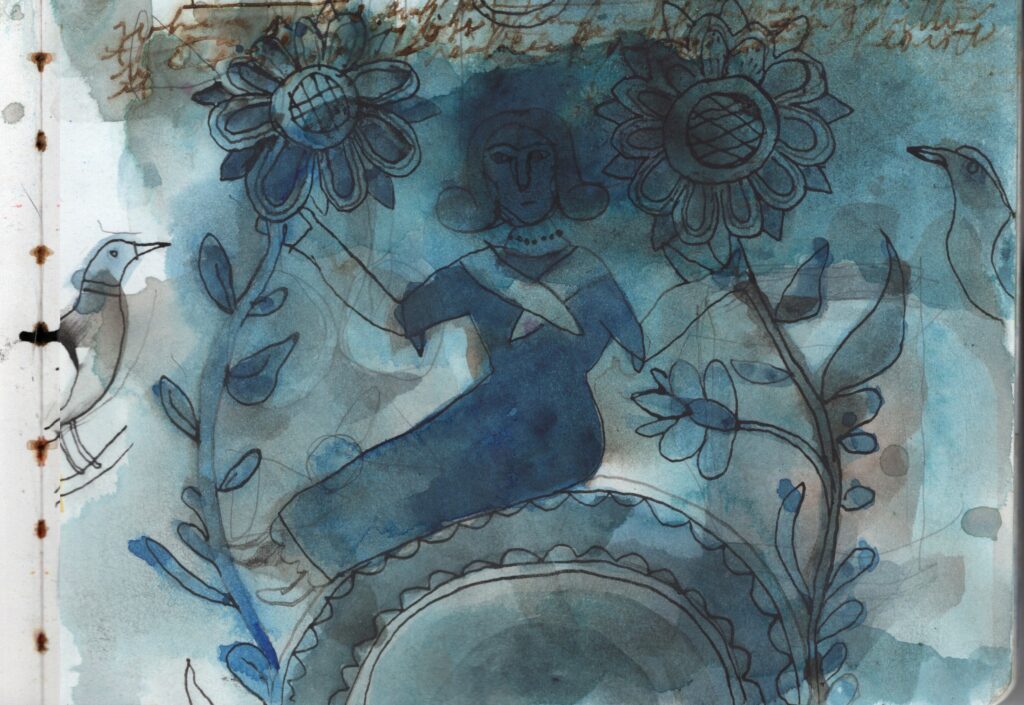
The Images
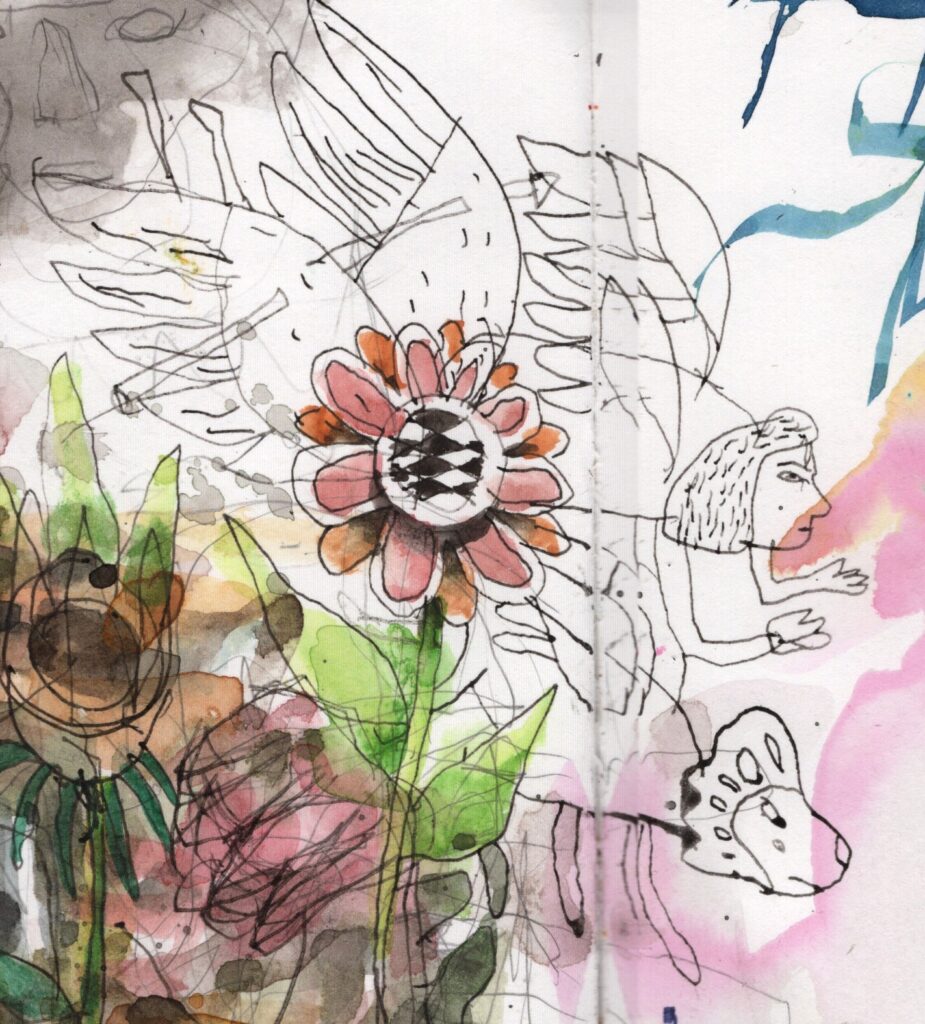
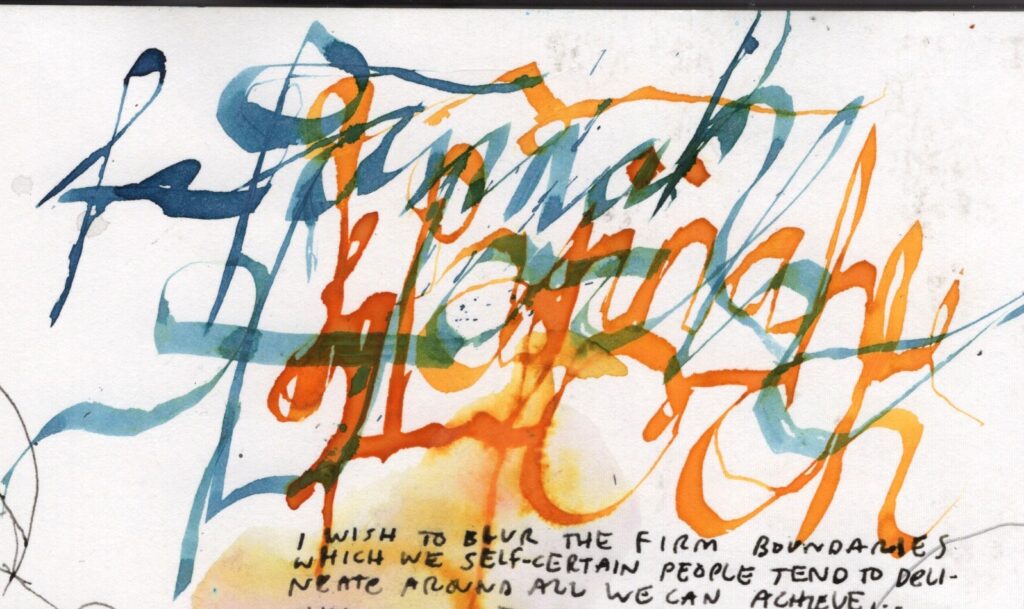
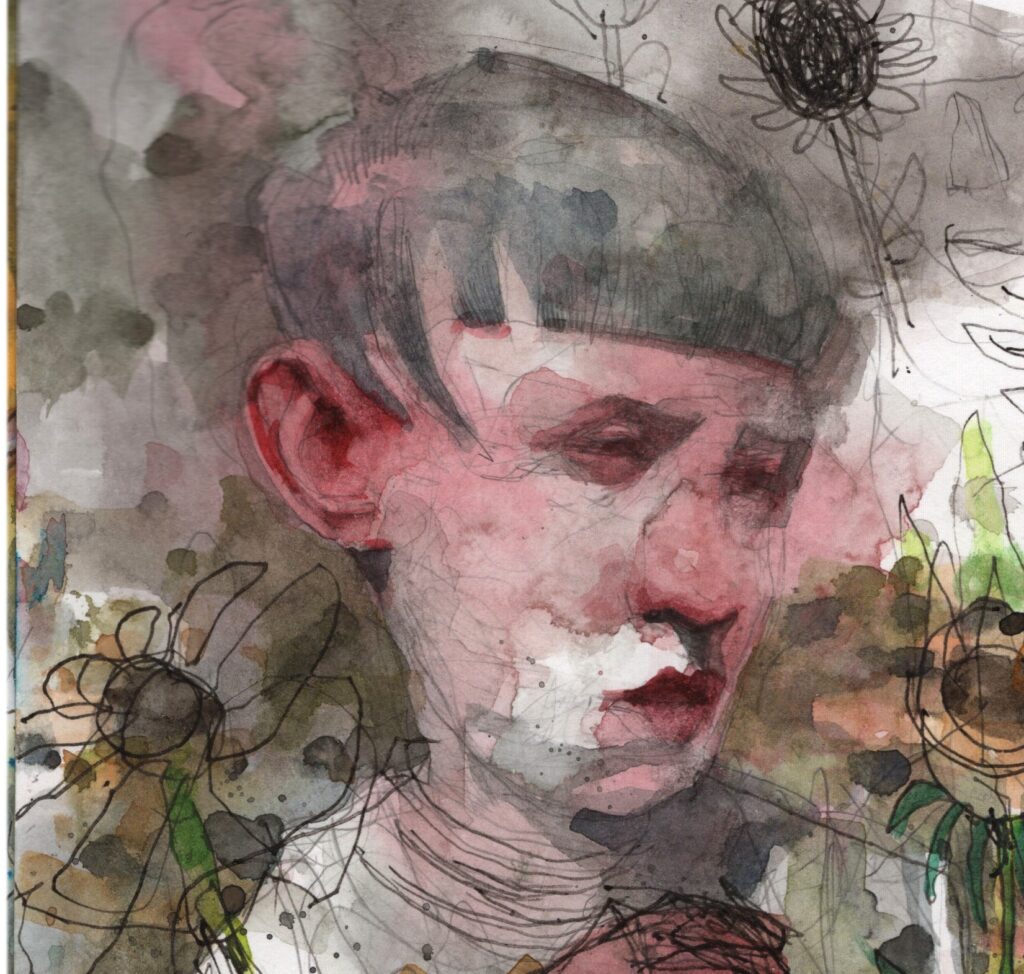
To be honest, I was looking for a blank piece of sketchbook paper the other day and I picked up this sketchbook from 2023. I was surprised by these images, and decided to scan them and share them on my blog, Psychic Courtyardism. Why did I do them? Maybe it was for a book project? Maybe just fun? To process the class? I honestly can’t remember. The text is, as best I can remember, pulled from writings from the artists whenever possible. If they don’t make sense, then, well… 20,000,000 give or take a few million.