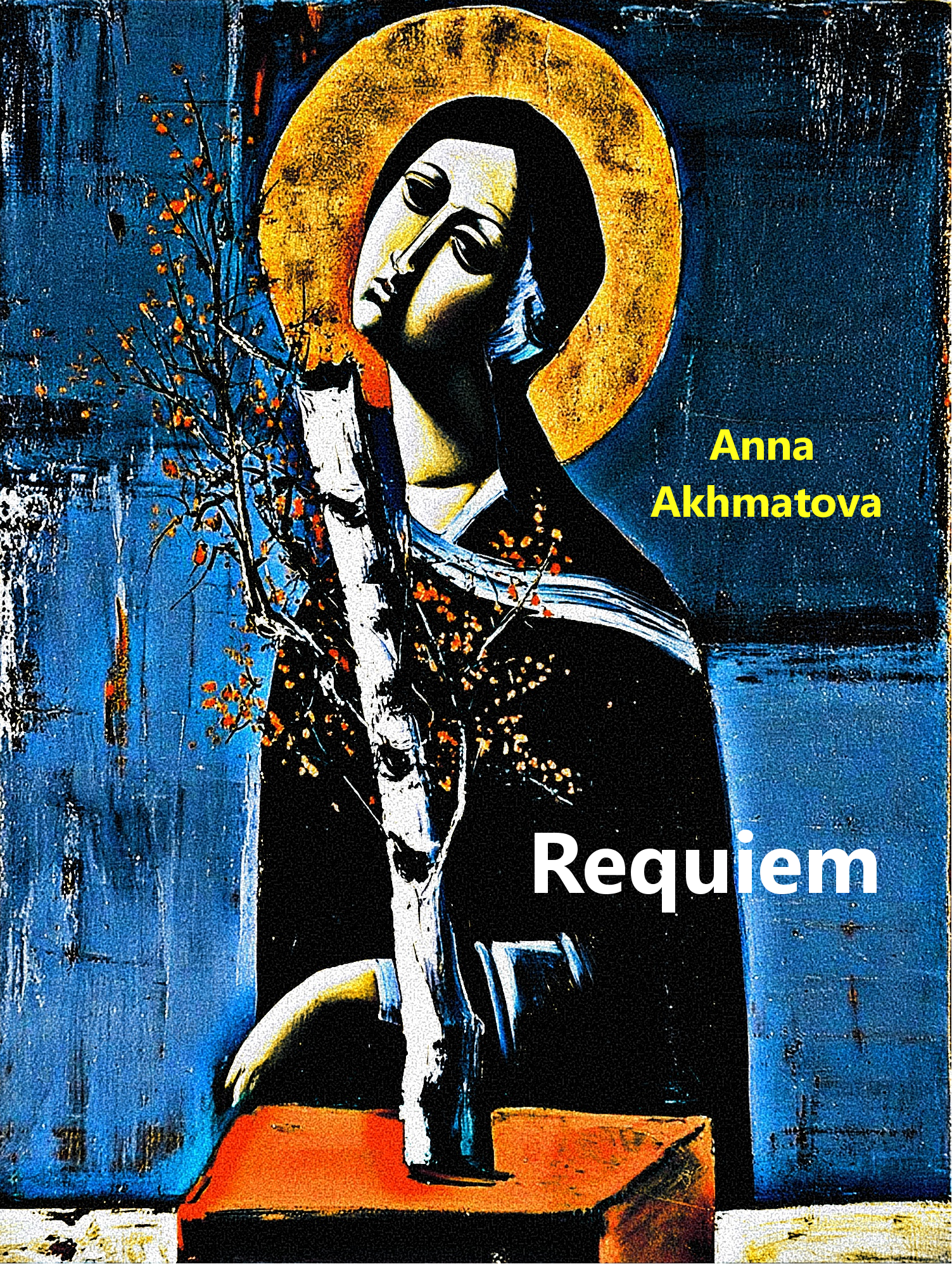
Requiem
Committing these poems to paper could have cost Akhmatova her life; her apartment was routinely searched for seditious manuscripts. So eleven of her friends memorized these verses, Farenheit 451 style. It was not until 1963, in the Kruschev thaw, that the poems were smuggled out of Russia and printed in a pirate edition. It would be nearly thirty years more before it was legal to read them in the land where they were written.
This is the first translation of Requiem to fully unpack, in the text itself, allusions to Russian history, along with references to customs, climate and so forth. I have added nothing, only amplified what was there. Though my tints are sometimes vivid, I have colored within the lines.
More importantly, this is the first translation to unmuzzle the feminist depth of the poems. The heroes of this condensed epic are all women.
Akhmatova expresses the existential—and tragic—grandeur of being a mother. And Requiem is unprecedented in its depiction of women’s special ability to join and support one another—a source of strength men only approximate through teams and rule-based organizations. Motherhoood, and the resilience of women together, are themes which male writers have only ever viewed through the diminishing lenses of, respectively, sentimentality and suspicion.
It is these centrally human but hitherto undiscovered subjects for poetry—formulated with an artistic simplicity worth of Greece at its apogee—and composed in a context of uttermost suffering and courage—that make this the greatest poetry of the twentieth century.